LinkedIn for B2B in India: Founder-Led Content That Builds Pipeline
A practical system for Indian B2B founders who want LinkedIn to produce conversations and pipeline, not just likes: what to post, how often, how to amplify and how to measure.
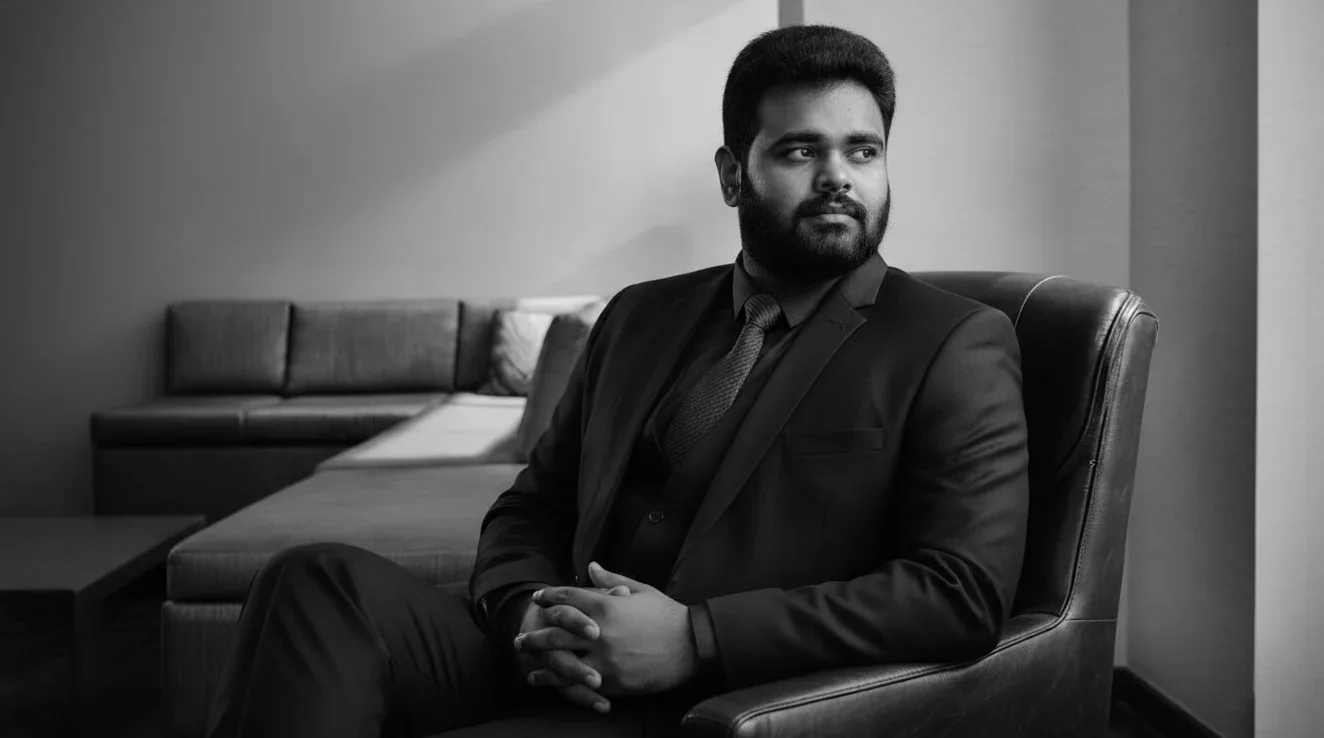 Athul Iyju Jacob Founder, Old Port
Published · Updated
Fact-checked 5 Nov 2026 against 6 sources
The short answer
Founder-led LinkedIn content works for Indian B2B companies when it builds memory with future buyers, not just engagement today. Post two to four times a week from the founder's profile on a few clear themes, mix text, short native video and document posts, reply to comments within hours, amplify proven posts with Thought Leader Ads, and track conversations, demo requests and self-reported attribution rather than impressions.
Key takeaways
- DataReportal lists about 170 million LinkedIn members in India from late 2025 data, around 11.6 percent of the population; these are registered members, not active users.
- The 95:5 idea from the LinkedIn B2B Institute and Professor John Dawes holds that only about 5 percent of B2B buyers are in the market at any time.
- LinkedIn said in February 2025 that video uploads were up 36 percent year on year, and it has since expanded video ads with publishers and creators.
- Since March 2024, Thought Leader Ads let companies sponsor posts from LinkedIn members who approve the request, not only verified employees.
- In March 2026 LinkedIn described replacing five feed retrieval systems with one LLM-based system, so clear topical expertise matters more than engagement tricks.
Founder-led LinkedIn content builds pipeline for Indian B2B companies when it is specific to the buyer's world, published consistently on a few themes, answered personally, and amplified only once it has proven itself. Its first job is to make sure your company is remembered when a buyer's need arises; its second is to make it easy for the few buyers who are ready to start a conversation. Measured that way, it often produces meetings a quarter or two after consistent posting starts.
Many founders treat LinkedIn as a broadcast channel for funding news and award photos, then wonder why it never produces a meeting. This guide explains why founder content works, what changed on LinkedIn in 2025 and 2026, and a system that connects posts to pipeline.
What is founder-led content?
Founder-led content is marketing published from the founder's personal profile, in their own voice, sharing their point of view, decisions and expertise.
It differs from a company page in one important way: people follow people. A founder's post reads as a conversation; a company post reads as an advertisement. It is not ghost-written motivational quotes. The best founder content is specific to the buyer: the mistakes customers make, the trade-offs in your category, what you learned shipping the product.
How big is LinkedIn in India in 2026?
LinkedIn reports about 170 million members in India, making it one of the platform's largest markets, though active use is lower than that number.
DataReportal's Digital 2026: India report lists 170 million LinkedIn members based on late 2025 data, about 11.6 percent of the total population and 16.4 percent of adults. The figure counts registered members, not monthly active users, so treat it as an upper bound on reach. For SaaS, IT services, manufacturing, logistics, HR and professional services, the decision-makers you want are there.
Why does founder content build pipeline when most buyers are not buying?
Because about 95 percent of B2B buyers are out of the market at any moment, content that builds memory today decides who gets shortlisted later.
Research from LinkedIn's B2B Institute, developed with the Ehrenberg-Bass Institute's Professor John Dawes, popularised the 95:5 rule: only around 5 percent of B2B buyers are in the market at any given time. As the authors put it, "the brand that gets remembered is the brand that gets bought."
That changes the job. Posts that only sell talk to the 5 percent and bore the 95. Posts that only entertain build a following that never buys. You need both, deliberately balanced: memorable expertise for the many, and an easy next step for the few.
What has changed on LinkedIn in 2025 and 2026?
Three changes matter for founders: more video, a feed that reads meaning, and founder posts that can become ads.
- Video is a priority. LinkedIn said in February 2025 that video uploads were up 36 percent year on year as it rolled out vertical video tools, per TechCrunch. In August 2025 Reuters reported LinkedIn expanding its BrandLink video ad programme to creators and publishers.
- The feed reads meaning, not just numbers. In March 2026 LinkedIn described replacing five separate feed retrieval pipelines with a single LLM-based system that interprets what a post is about and matches it to members' professional interests, including people outside your network, as VentureBeat reported. Clear topical focus helps the system know who should see your posts.
- Founder posts can become ads. Since March 2024, Thought Leader Ads let a company sponsor posts from a LinkedIn member who approves the request, not just verified employees, per MarTech. This is the bridge between organic founder content and paid distribution.
Which LinkedIn formats work best for B2B founders?
Text posts carry opinions, short native video carries credibility, and document posts carry frameworks; comments reach buyers in conversations that already exist.
| Format | Best for | Watch-outs |
|---|---|---|
| Text post (with or without one image) | Opinions, lessons, frameworks, short stories | The first two lines decide whether anyone clicks "see more" |
| Short native video (30 to 90 seconds, vertical) | The founder's face and voice, product walkthroughs, event clips | Add captions; many people watch on mute in offices |
| Document (PDF carousel) post | Checklists, step-by-step guides, mini-reports | Keep slides readable on a phone; one idea per slide |
| Newsletter or long article | Depth for an existing audience; evergreen reference | Slower to build; promote each issue with a native post |
| Comments on others' posts | Reaching buyers where conversations already happen | Add substance; "Great post" does nothing |
Avoid engagement bait ("comment YES for the PDF") and comment automation tools. A feed that ranks by meaning gives little lasting benefit to tricks, and senior buyers notice them.
What does a sustainable founder content system look like?
It should cost the founder about two hours a week: one interview, quick edits and personal replies.
- Pick three themes. One about the buyer's problem, one about how you work or build, one about the market. Every post maps to one.
- Run a 30-minute weekly interview. A marketer asks five questions drawn from sales calls, support tickets and industry news, and records the answers.
- Draft from the founder's words. Turn the recording into two to four posts and one short video script, keeping the founder's phrasing.
- Founder edits and approves. Ten minutes per post. If the founder would not say it in a meeting, it does not go out.
- Founder replies personally. Comments in the first few hours, and every relevant DM. This is where pipeline starts.
- Amplify what works. Each month, put a modest Thought Leader Ads budget behind the two posts that drew the best comments from target-account people.
Generative AI can speed up drafting, but readers notice when a founder's voice is flattened into generic copy. Our article on generative AI content and brand safety covers sensible guardrails.
Ten post ideas that work for Indian B2B founders
- The three questions every prospect asks in the first call, answered honestly.
- A cost breakdown buyers can forward to finance.
- What went wrong on a project and what you changed (no client names without permission).
- A myth in your category, with evidence.
- How a regulation such as the DPDP Act affects your buyers.
- A before-and-after of a process, described as method.
- Hiring lessons from building the team.
- A short video tour of how the product handles one painful task.
- Your view on a recent industry announcement, within 48 hours.
- A checklist as a document post.
What is different about LinkedIn B2B in India?
Hierarchical buying committees, local trust signals and a quick hand-off to WhatsApp shape what works.
- Buying committees are hierarchical. Content that helps a mid-level champion make the internal case (comparisons, costs, implementation timelines) often matters more than content aimed at the CXO.
- Trust is personal and local. Mention the cities, industries and constraints buyers deal with: GST workflows, Tier 2 expansion, export compliance, data protection. Our DPDP Act guide is an example of a topic Indian buyers actively research.
- WhatsApp is the next step. Many conversations move to WhatsApp quickly; capture that hand-off in your CRM using our CRM selection guide for India.
- India to Gulf demand. Many Indian B2B firms sell into the UAE. Align founder content with what Gulf buyers search for; our UAE team's guide to AI search in the Gulf is a useful companion.
How do you measure whether LinkedIn is producing pipeline?
Track target-account engagement, conversations, inbound requests and sales influence monthly; impressions tell you little.
- Target-account engagement: people from your ideal customer list who reacted, commented or followed.
- Conversations started: DMs and comment threads that became a call.
- Inbound requests where the form's "How did you hear about us?" field mentions LinkedIn or the founder. Self-reported attribution catches what pixels miss.
- Sales influence: deals where the buyer referenced a founder post.
Common mistakes that stall pipeline
- Posting only company news, so nothing helps a buyer think.
- Switching themes every week, which makes the founder hard to place and hard for the feed to match.
- Boosting posts with high likes but no comments from target accounts.
- Letting a marketer reply to comments in the founder's name.
Expect a lag of one or two quarters. For connecting soft signals to revenue, see our guide to marketing attribution without cookies.
How we approach founder content at Old Port
We start by rewriting the founder's headline and About section around the buyer's problem, agree three themes, and commit to eight posts in four weeks before judging anything. We run the weekly interview, draft in the founder's words, and review what earned real conversations each month before adding paid amplification. Our social media management and brand strategy teams in Bengaluru and Kochi run founder-led programmes, and you can talk to us about yours.
Frequently asked questions
How many LinkedIn users are there in India?
DataReportal's Digital 2026 India report lists about 170 million LinkedIn members in India based on late 2025 data, around 11.6 percent of the population and 16.4 percent of adults. This counts registered members rather than active users, so actual weekly reach is lower. India is still one of LinkedIn's largest markets for B2B decision-makers.
How often should a founder post on LinkedIn?
Two to four posts a week is a sustainable rhythm for most founders, as long as each post has a clear point tied to one of a few themes. Consistency over months matters more than daily volume. Founders should also spend time replying to comments and commenting thoughtfully on posts from buyers and peers.
What are LinkedIn Thought Leader Ads?
Thought Leader Ads let a company pay to promote a post published from an individual's profile, such as the founder's. Since March 2024 brands can sponsor posts from LinkedIn members beyond verified employees, provided the member approves the request. They work best on posts that have already proven they resonate organically with your target buyers.
Does video work for B2B on LinkedIn?
Yes. LinkedIn reported a 36 percent year-on-year rise in video uploads in February 2025 and has since expanded video advertising with creators and publishers. Short native clips of a founder explaining an idea or demonstrating a product help buyers judge credibility. Add captions, make the first seconds count and pair video with text posts.
Has the LinkedIn algorithm changed in 2026?
Yes. In March 2026 LinkedIn described replacing five separate feed retrieval systems with a single LLM-based system that interprets what posts are about and matches them to members' professional interests, including people outside your network. Clear, consistent topics and genuine expertise help the system find the right audience; engagement tricks help less.
How long does founder-led content take to produce leads?
Usually longer than founders expect. Because only a small share of B2B buyers are in the market at any time, founder content builds memory first and pipeline later. Many companies see meaningful conversations after one or two quarters of consistent posting. Track target-account engagement and self-reported attribution to see progress early.
Sources
- DataReportal: Digital 2026: India
- Marketing Week: The 95:5 rule (Weinberg and Lombardo, B2B Institute)
- TechCrunch: LinkedIn amps up vertical video tools as uploads jump 36%
- The Star (Reuters): LinkedIn deepens video ad push, taps more publishers and creators
- VentureBeat: How LinkedIn replaced five feed retrieval systems with one LLM model (March 2026)
- MarTech: LinkedIn now allows brands to sponsor any organic post
Cite this article
Jacob, A. I. (2026). LinkedIn for B2B in India: Founder-Led Content That Builds Pipeline. Old Port India. https://oldportindia.com/insights/linkedin-b2b-founder-content/ Plain-text version
Athul Iyju Jacob, Founder and Managing Director, Old Port
Athul founded Old Port in Bengaluru in 2021. His background spans animation, graphic design and brand strategy, with more than six years in marketing across e-commerce, EdTech, healthcare, B2B and technology. He builds Old Port's own games, including GameHarbor and MindHarbor.