Building a WhatsApp AI Chatbot for an Indian Business in 2026
WhatsApp pricing, policy and billing all shifted in 2026. Here is how to design an AI chatbot that is allowed, affordable and actually useful for Indian customers.
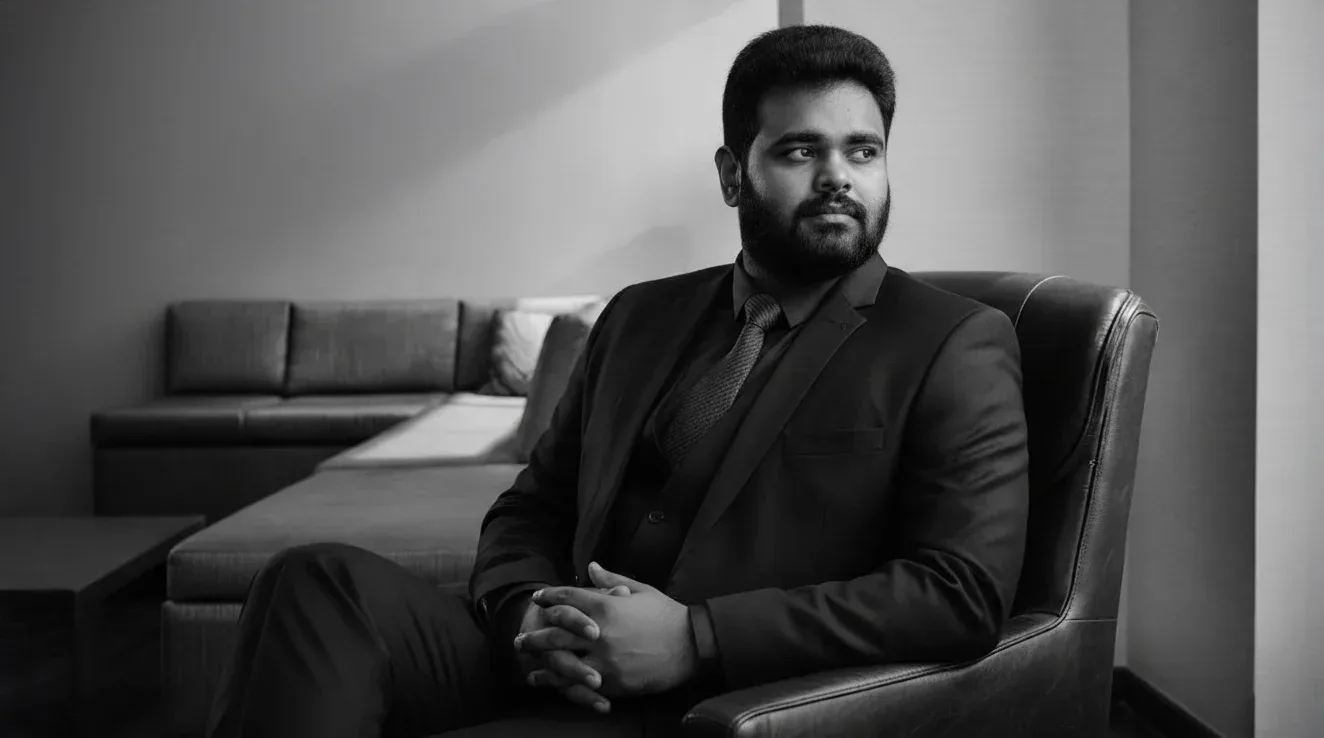 Athul Iyju Jacob Founder, Old Port
Published · Updated
Fact-checked 5 Nov 2026 against 8 sources
The short answer
Build it on the WhatsApp Business Platform (Cloud API), directly or through a provider, collect clear opt-in, and keep the bot focused on your own customers, because general-purpose AI assistants are barred. Since 1 October 2026, bot replies cost money in India: reported rates are about ₹0.115 per service or utility message after 1,000 free service messages a month, and ₹0.8631 per marketing message, before GST.
Key takeaways
- Meta has charged per delivered message since 1 July 2025, and it changes rates only on 1 January, 1 April, 1 July or 1 October.
- From 1 October 2026, free-form service replies and utility templates sent inside the 24-hour window are charged; reported India rates are ₹0.115 per message, with 1,000 free service messages per number each month.
- Messages inside the 72-hour free entry point window, opened by Click to WhatsApp ads or Facebook Page buttons, remain free.
- General-purpose AI assistants have been barred from the platform since 15 January 2026; bots that serve a business's own customers are allowed.
- Meta says eligible Indian customers must move every WhatsApp Business Account to INR billing by 31 December 2026, or messages stop being delivered from 1 January 2027.
To build a WhatsApp AI chatbot for an Indian business in 2026, connect to the WhatsApp Business Platform through Meta's Cloud API or a Business Solution Provider, collect clear opt-in, and build a narrow assistant that answers questions about your own products, orders and bookings. Budget for message charges: since 1 October 2026, the replies a bot sends inside a conversation are no longer free in India after a monthly allowance. This guide covers what to build, what it costs, what Meta allows and how to hand conversations to your sales team.
Which WhatsApp product do you need for a chatbot?
You need the WhatsApp Business Platform (the API), not the free WhatsApp Business app. Only the platform supports webhooks, automation, multiple agents and CRM integration.
| Option | What it is | Good for |
|---|---|---|
| WhatsApp Business app | Free app on one phone, with labels and quick replies | Sole traders with low volume; no real automation |
| Cloud API, direct | Meta-hosted API that your own developers connect to | Teams with developers who want full control and no provider markup |
| Business Solution Provider (BSP) | A partner dashboard on top of the Cloud API, with inbox, template manager, bot builder and CRM connectors | Most SMEs that want to launch in weeks, not months |
Either way, the AI logic usually lives in your own service or the provider's bot layer. It receives each incoming message by webhook, decides whether to answer, ask a question or hand off, and replies through the API. Compare providers on total cost: some pass Meta's rates through and charge a platform fee, others add a percentage markup to every message.
How much does the WhatsApp Business API cost in India in 2026?
Meta charges per delivered message, based on the message category and the recipient's country code. It moved from conversation-based to per-message pricing on 1 July 2025, and its pricing documentation says rates change only on 1 January, 1 April, 1 July or 1 October.
The message categories
- Marketing templates: offers, announcements and re-engagement. Always charged.
- Utility templates: updates tied to something the customer did, such as order confirmations, delivery updates and payment reminders.
- Authentication templates: one-time passcodes. India also has a higher authentication-international rate for OTPs sent by businesses outside India.
- Service messages: free-form, non-template replies sent within 24 hours of the customer's last message. This is what most chatbot replies are.
Current India rates
| Category | Rate | Notes |
|---|---|---|
| Marketing | ₹0.8631 | Raised on 1 January 2026; no volume tiers |
| Utility | ₹0.115 | Now charged inside the 24-hour window too; volume tiers available |
| Authentication | ₹0.115 | Volume tiers available |
| Authentication-international | ₹2.4971 | Raised on 1 April 2026 |
| Service (free-form replies) | ₹0.115 | First 1,000 per business number per month free; no volume tiers |
The rupee figures are as reported by the Free Press Journal and IBTimes India on 30 September 2026. Providers that add a markup will show higher numbers, and 18% GST applies on top, so check your own invoice against Meta's rate card.
What changed for chatbots on 1 October 2026?
Service messages, which had been free since November 2024, became chargeable on 1 October 2026, and utility templates sent in reply to a customer inside the 24-hour window are now charged from the first message. Meta's page on service and utility message pricing says service rates match each market's utility and authentication rate and have no volume tiers. Providers including respond.io report a free allowance of 1,000 service messages per business phone number per calendar month, which does not roll over.
One exception matters for advertisers. When a customer messages you from a Click to WhatsApp ad or a Facebook Page call-to-action button and you reply within 24 hours, a 72-hour free entry point window opens, and messages in that window remain free.
What a chatbot costs to run: a worked example
Illustrative only. A clinic receives 3,000 WhatsApp conversations a month, not from ads, and its bot sends an average of four replies per conversation: 12,000 service messages. After the 1,000 free messages, 11,000 are charged at ₹0.115, about ₹1,265 before GST and markup. If the same bot split each answer into three bubbles, the bill would roughly triple. Sending one complete message instead of several short ones is now a cost decision as well as a design one.
Do you need to switch to INR billing?
Yes, if Meta treats your business as eligible. Meta's pricing documentation says billing localisation for India launched on 1 January 2026, that all WhatsApp Business Accounts in an eligible business portfolio must be migrated to INR by 31 December 2026, and that from 1 January 2027 Meta will stop delivering messages from non-INR accounts of eligible customers. Ask your provider now whether your account has moved.
Are AI chatbots allowed on WhatsApp Business?
Yes, if the AI serves your own customers. Since 15 January 2026, Meta's terms bar general-purpose AI assistants, where the AI itself is the product, from the WhatsApp Business API. As TechCrunch reported, Meta later agreed to let such assistants operate in Europe for 12 months for a per-message fee while regulators investigate, but a retailer's or clinic's customer service bot was never covered by the ban.
In practice: build a bot that knows your products, prices, policies and orders, and that politely declines unrelated questions. That keeps you inside the policy and gives customers a better experience.
What about Meta's own Business Agent?
Meta also sells its own AI agent for business messaging. According to Meta's non-template pricing page, Business Agent messages delivered through the API are charged from 1 August 2026 at USD 2 per million tokens, with a typical message using 20,000 to 25,000 tokens, or roughly 4 to 5 US cents. Indian businesses are billed in INR. Compare that against the cost of your own language model plus the ₹0.115 service rate before choosing.
What are the opt-in and consent rules?
You need clear opt-in that names your business before you message anyone. Meta's opt-in guidance allows collection on a website, by SMS, in an IVR flow or on paper, recommends separate opt-ins for different message types such as order updates and offers, and requires clear opt-out instructions. If quality stays low for a sustained period, Meta rate-limits the business.
In India, the Digital Personal Data Protection Act also applies. The DPDP Rules were notified in November 2025, and most notice and consent obligations apply from May 2027, according to this compliance timeline. A pre-ticked box or a line buried in your terms is unlikely to meet the Act's standard of free, specific and informed consent. Our DPDP compliance guide for marketers covers consent design. This is general information, not legal advice.
What design patterns work for a WhatsApp AI chatbot?
The bots that work are narrow, grounded in your own data and quick to hand off. These are the patterns we rely on:
- Intent first, AI second. Use reply buttons or list messages for the top five intents (track order, book, pricing, talk to a person, other). Send only free-text questions to the language model. This is cheaper and more predictable.
- Ground every answer. Connect the model to an approved knowledge base and live order or booking data. If the answer is not there, hand off rather than guess.
- One message, not five. Write complete, scannable replies. Fewer bubbles mean a lower bill and less notification fatigue.
- Disclose the bot. Say upfront that it is an automated assistant and how to reach a person.
- Collect only what you need. Ask for name, city and interest, not date of birth or ID numbers, unless the service truly requires them.
- Respect language preference. Offer English plus the regional language your customers use, and have a native speaker review templates. Our guide to regional language content in India covers the nuance.
- Use Click to WhatsApp ads deliberately. The 72-hour free entry point window makes ad-driven conversations cheaper to qualify. Our Meta ads guide for India compares them with instant forms.
Common mistakes to avoid
- Letting the model answer pricing or medical questions from its general knowledge instead of your data.
- Sending marketing templates to everyone who ever enquired, without a recorded opt-in.
- Building a twenty-step menu tree that customers abandon at step three.
- Ignoring the October 2026 change and budgeting service replies at zero.
How should the chatbot hand off to your CRM and team?
The chatbot should create or update a CRM record on the first message and pass qualified conversations to a named person with the full transcript. The bot is only half the system:
- Create or update the contact with source (ad, website, QR code) and opt-in status recorded.
- Write structured fields from the conversation, such as product interest, budget band, city and urgency, so sales can filter and prioritise.
- Assign and alert. Route qualified leads to the right salesperson by product or region.
- Use a shared inbox so a human can take over the same thread without the customer switching numbers.
- Close the loop by tagging outcomes (won, lost, no response) so you can see which flows produce revenue.
Choosing the right CRM matters here; see our CRM selection guide for Indian businesses and our marketing automation workflows. For a wider view of where agents fit, read our piece on AI agents for Indian SMEs.
How should you launch and measure a WhatsApp chatbot?
Launch in stages and measure cost per resolved conversation, not just volume. A sensible sequence:
- Internal test (two weeks): staff pose as customers and try to break the bot.
- Limited live period: office hours only, with every conversation reviewed.
- Full rollout: weekly sampling of transcripts and a monthly review of message costs.
Track first response time, resolution without handoff, qualified-lead rate, opt-out and block rate, and charged messages per conversation.
How we approach this at Old Port
We start from the five or six questions customers ask most, not from the AI model. We map those to buttons and grounded answers, write the handoff rules with the sales team, and only then decide whether a language model is needed for the long tail. We treat message count per conversation as a design metric from day one. Our AI solutions and MarTech automation teams build these assistants with CRM and helpdesk integrations. For brands selling in both India and the Gulf, our UAE team's UAE social media statistics for 2026 show how messaging behaviour compares there.
Frequently asked questions
How much does a WhatsApp Business API message cost in India in 2026?
Reported India rates from 1 October 2026, before GST, are about ₹0.8631 per marketing message and ₹0.115 per utility, authentication or service message, with the first 1,000 service messages per business number free each month. Authentication-international costs about ₹2.4971. Providers may add markup and 18% GST applies, so check your invoice against Meta's current rate card.
Are WhatsApp chatbot replies still free inside the 24-hour window?
Not any more. Since 1 October 2026, free-form service replies are charged at the utility rate after a reported allowance of 1,000 per business number per month, and utility templates sent inside the window are charged from the first message. Conversations opened from Click to WhatsApp ads or Facebook Page buttons still get a 72-hour window in which messages are free.
Are AI chatbots banned on WhatsApp?
No. Since 15 January 2026, Meta bars general-purpose AI assistants whose main product is the AI itself from the WhatsApp Business API, with a temporary paid exception in Europe. Businesses can still use AI chatbots to serve their own customers for support, bookings, order tracking and sales. Keep the bot focused on your business and decline unrelated questions.
Do Indian businesses have to switch WhatsApp billing to INR?
Eligible businesses do. Meta's pricing documentation says all WhatsApp Business Accounts in an eligible Indian business portfolio must be migrated to INR billing by 31 December 2026, and that from 1 January 2027 Meta will stop delivering messages from non-INR accounts of eligible customers. Confirm the status of your account with your provider or in Meta Business Suite.
Do I need customer consent to message them on WhatsApp?
Yes. Meta requires a clear opt-in that names your business before you message someone, recommends separate opt-ins for different message types, and expects clear opt-out instructions. Indian law also applies, including the DPDP Act, which expects consent to be free, specific and informed, with most obligations applying from May 2027. This is general information, not legal advice.
Should I use the WhatsApp Cloud API directly or a BSP?
Use the Cloud API directly if you have developers and want full control with no provider markup. Use a Business Solution Provider if you want a ready inbox, template manager, chatbot builder and CRM connectors quickly. Most small and mid-sized Indian businesses start with a provider and revisit the choice once message volume and costs justify an in-house build.
Sources
- Meta for Developers: Pricing on the WhatsApp Business Platform
- Meta for Developers: Upcoming pricing updates for Meta Business Agent, service and utility messages
- Meta for Developers: Get opt-in for WhatsApp
- Free Press Journal: How much does India have to pay for WhatsApp messages from October 1?
- IBTimes India: WhatsApp Business messages to become paid from October 1
- respond.io: WhatsApp pricing change 2026
- TechCrunch: Meta will allow rival AI chatbots on WhatsApp in Europe, but for a fee
- Mondaq: DPDP Act and Rules, a ticking compliance timeline
Cite this article
Jacob, A. I. (2026). Building a WhatsApp AI Chatbot for an Indian Business in 2026. Old Port India. https://oldportindia.com/insights/whatsapp-ai-chatbot-business-india/ Plain-text version
Athul Iyju Jacob, Founder and Managing Director, Old Port
Athul founded Old Port in Bengaluru in 2021. His background spans animation, graphic design and brand strategy, with more than six years in marketing across e-commerce, EdTech, healthcare, B2B and technology. He builds Old Port's own games, including GameHarbor and MindHarbor.